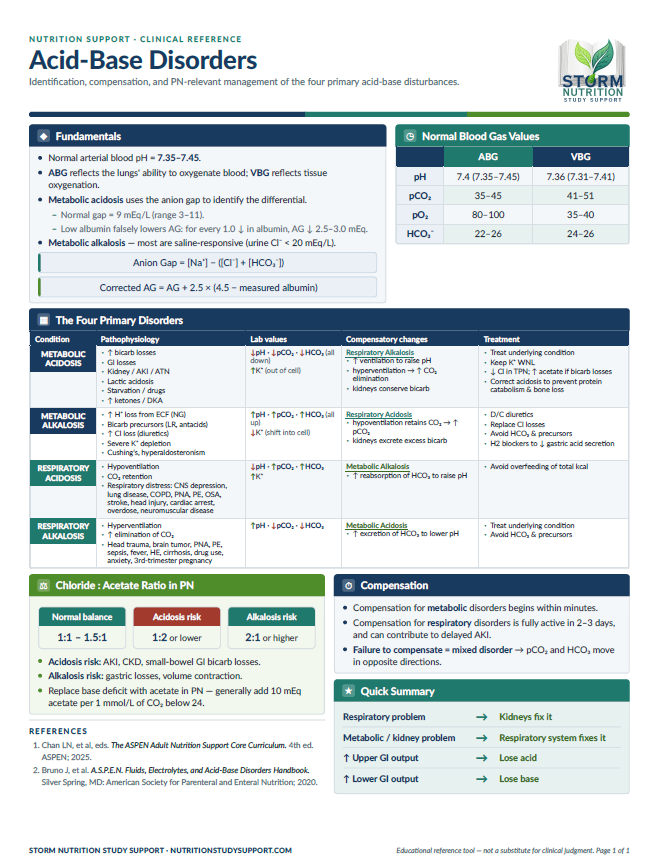
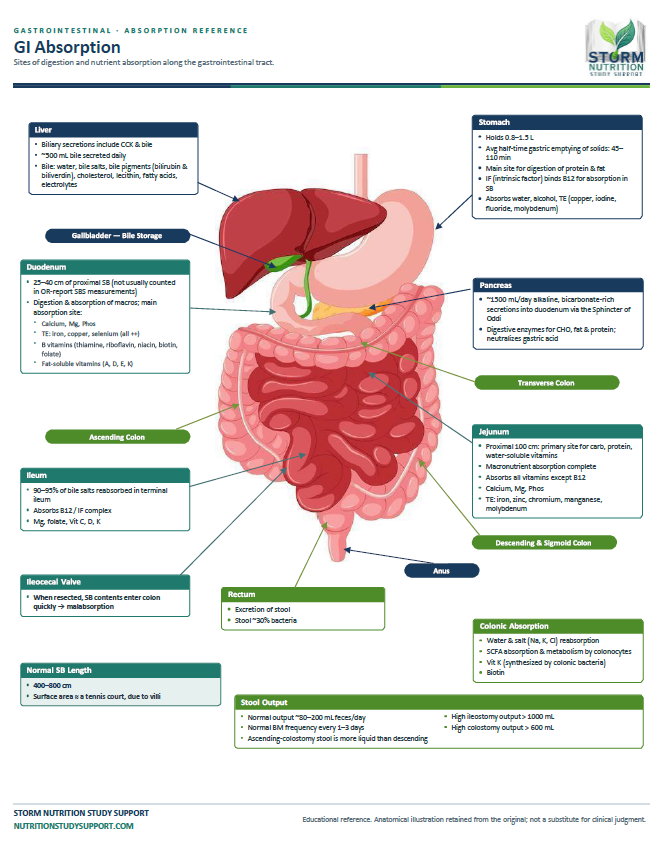
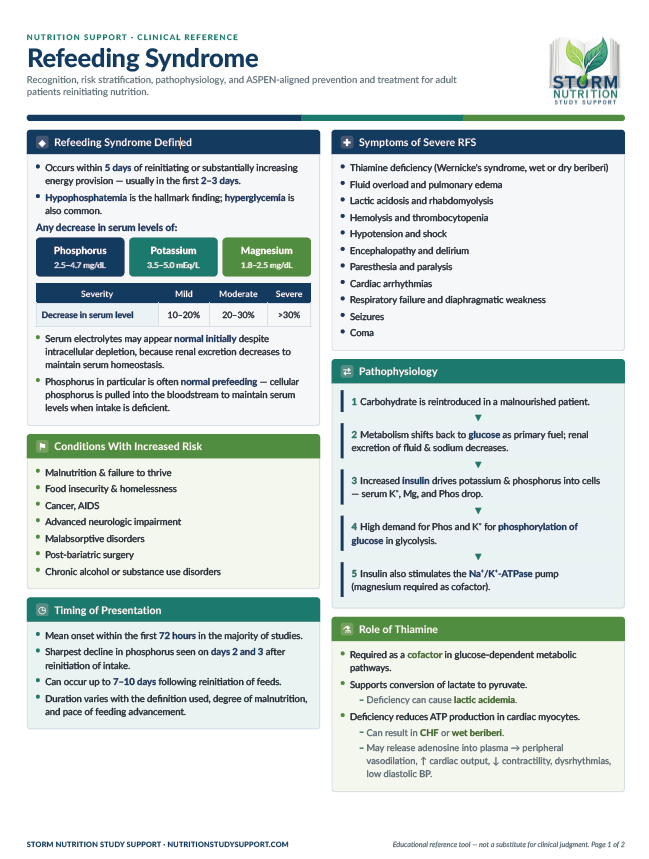
 Image 1 of 3
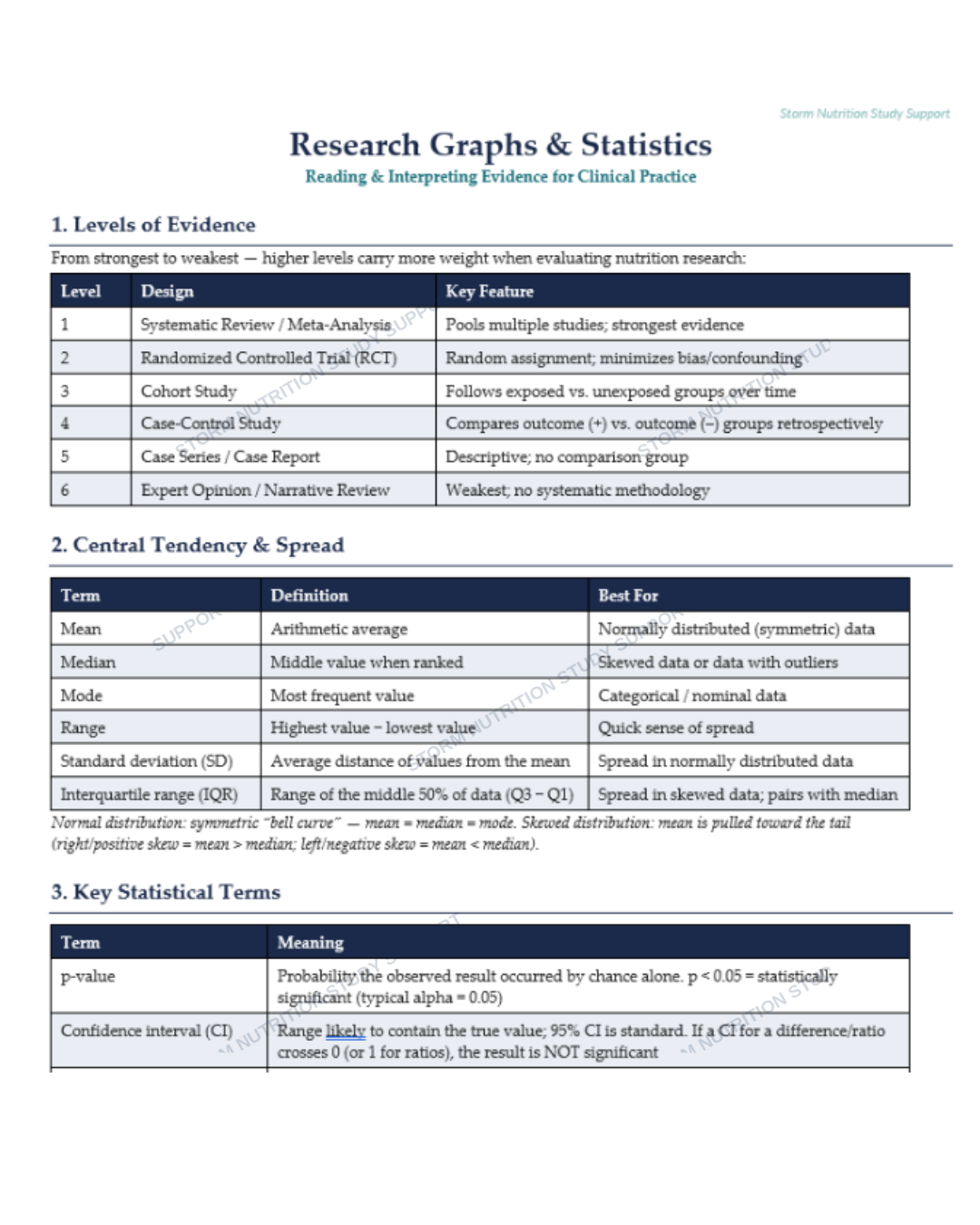 Image 2 of 3
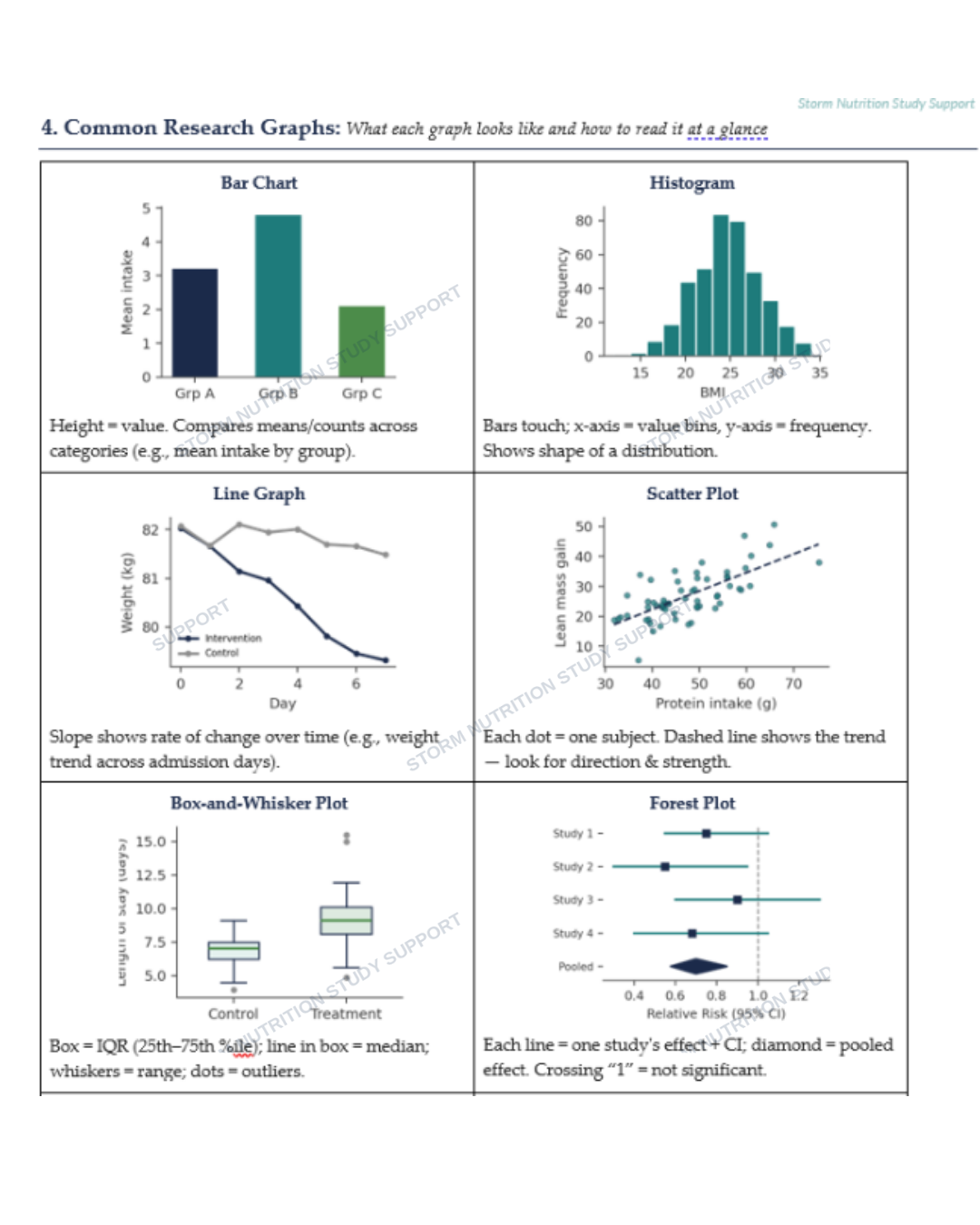 Image 3 of 3
Stop guessing your way through the "stats question" on the exam.
If a forest plot, a confidence interval, or a p-value has ever made you skip ahead to the next question, this quick reference guide is for you. Research literacy shows up throughout the CNSC and RD-AP exams — and in real clinical practice every time you have to decide whether a new study actually changes how you feed a patient.
Research Graphs & Statistics is a 10-page, fully illustrated guide that breaks down everything you need to read, interpret, and apply nutrition research with confidence — from study design through human subjects protections.
What's inside:
🔬 Types of research studies — qualitative vs. quantitative, experimental vs. observational, and where each fits in the evidence hierarchy
⚖️ Study design quality — validity vs. reliability, levels of measurement, sampling methods, common statistical tests (t-test, ANOVA, chi-square), bias types, and blinding
📏 When you need a power analysis — and why skipping one risks an underpowered study
📊 8 illustrated graph types — bar charts, histograms, line graphs, scatter plots, box-and-whisker plots, forest plots, Kaplan-Meier curves, and pie charts, each with a real example and a "best for / how to read" breakdown
📐 Key statistics, decoded — p-values, confidence intervals, sensitivity/specificity, relative risk, odds ratios, publication bias, heterogeneity (I²), and more
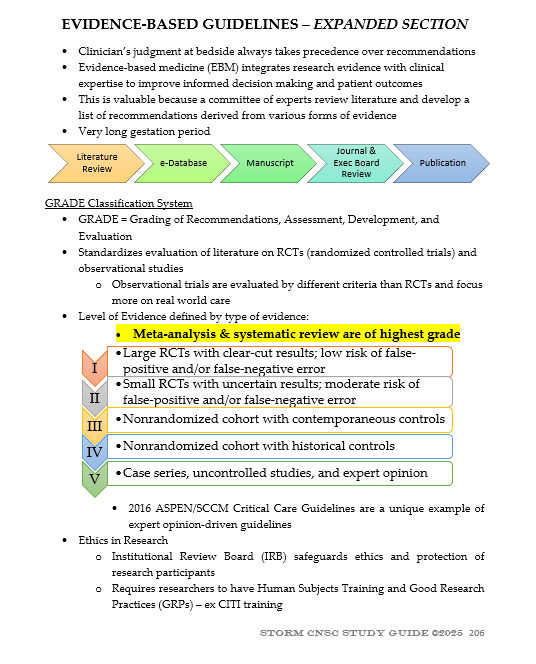
🥗 Clinical nutrition application — a PICOT framework for evaluating studies, nutrition-specific red flags (including funding/conflict of interest), and how evidence gets graded (GRADE)
🧑⚖️ Human subjects research & IRB — what requires review, the three levels of IRB review, informed consent, and the Belmont Report principles
📖 Glossary of 19 must-know terms, fully defined
✏️ 10 practice questions with a full answer key to test yourself before test day
Whether you're deep in CNSC or RD-AP prep or just want to read a journal article without Googling every acronym, this is the reference you'll keep coming back to.
Stop guessing your way through the "stats question" on the exam.
If a forest plot, a confidence interval, or a p-value has ever made you skip ahead to the next question, this quick reference guide is for you. Research literacy shows up throughout the CNSC and RD-AP exams — and in real clinical practice every time you have to decide whether a new study actually changes how you feed a patient.
Research Graphs & Statistics is a 10-page, fully illustrated guide that breaks down everything you need to read, interpret, and apply nutrition research with confidence — from study design through human subjects protections.
What's inside:
🔬 Types of research studies — qualitative vs. quantitative, experimental vs. observational, and where each fits in the evidence hierarchy
⚖️ Study design quality — validity vs. reliability, levels of measurement, sampling methods, common statistical tests (t-test, ANOVA, chi-square), bias types, and blinding
📏 When you need a power analysis — and why skipping one risks an underpowered study
📊 8 illustrated graph types — bar charts, histograms, line graphs, scatter plots, box-and-whisker plots, forest plots, Kaplan-Meier curves, and pie charts, each with a real example and a "best for / how to read" breakdown
📐 Key statistics, decoded — p-values, confidence intervals, sensitivity/specificity, relative risk, odds ratios, publication bias, heterogeneity (I²), and more
🥗 Clinical nutrition application — a PICOT framework for evaluating studies, nutrition-specific red flags (including funding/conflict of interest), and how evidence gets graded (GRADE)
🧑⚖️ Human subjects research & IRB — what requires review, the three levels of IRB review, informed consent, and the Belmont Report principles
📖 Glossary of 19 must-know terms, fully defined
✏️ 10 practice questions with a full answer key to test yourself before test day
Whether you're deep in CNSC or RD-AP prep or just want to read a journal article without Googling every acronym, this is the reference you'll keep coming back to.